




The smell usually hits first – not when you walk into the room, but when you come back after being out for a few hours. That stale, sour pet smell sitting in the carpet is exactly why pet odour carpet treatment needs more than a quick spray or a pass with the vacuum. Once urine, oils, dander or vomit sink below the carpet fibres, the issue is no longer just surface-level. It becomes a hygiene problem as much as a comfort problem.
For Sydney households, rentals and managed properties, that matters. A carpet that looks clean can still hold odours in the underlay, backing and even the subfloor. In family homes, it affects day-to-day living. In vacate cleans, it can affect inspections. In commercial settings, especially pet-friendly offices or waiting areas, it can quickly undermine presentation standards.
Why pet odours linger in carpet
Pet smells are stubborn because they do not all come from the same source. Fresh accidents are one issue, but repeated marking, dampness and tracked-in organic matter create a different type of contamination. Urine is especially difficult because it travels. It moves through carpet pile into the backing and underlay, then dries as concentrated crystals. When humidity rises, those crystals can reactivate and the smell returns.
That is why many DIY efforts seem to work for a few days, then fail. Surface cleaners may improve the top layer, but they often do not reach the source. Some products also leave heavy fragrance behind, which masks the odour rather than removing it. The result is a carpet that smells like perfume and pet odour at the same time.
There is also a difference between visible staining and actual odour load. A small stain can produce a strong smell if it has penetrated deeply. On the other hand, a larger mark may be easier to treat if it was dealt with quickly. Timing, carpet type, fibre density and the extent of contamination all shape the right treatment approach.
What effective pet odour carpet treatment involves
A proper pet odour carpet treatment starts with identifying where the smell is coming from and how far it has spread. That sounds obvious, but it is where many treatments go wrong. If the affected area is larger than the visible stain, cleaning only the mark will not solve the problem.
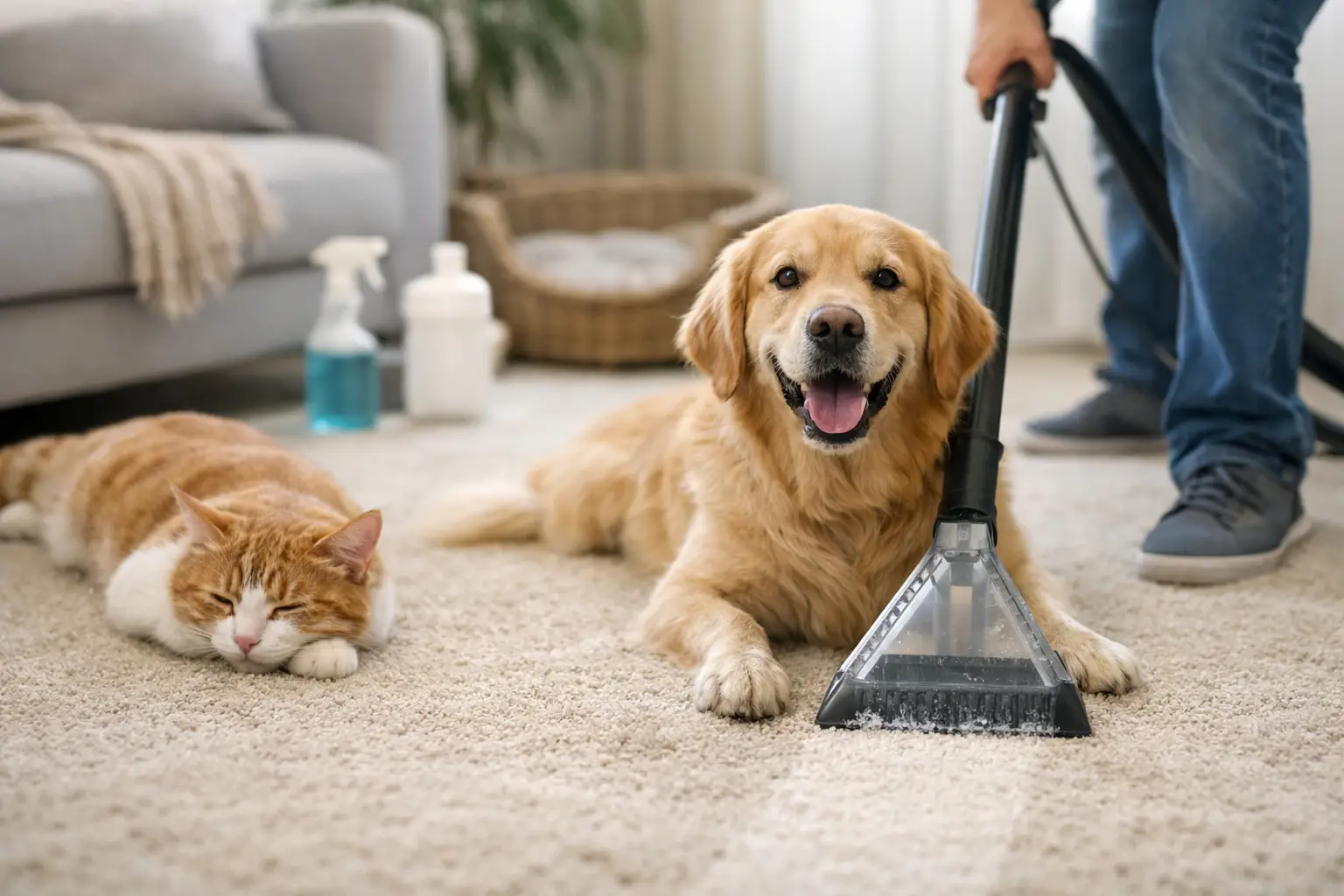
Professional treatment usually begins with inspection. This may include checking traffic patterns, recurring pet spots and the level of absorption into the carpet and underlay. From there, the treatment method needs to match the condition of the carpet. In some cases, targeted spot treatment is enough. In others, deep carpet steam cleaning with specialised deodorising and sanitising products is the better option.
The strongest results generally come from a combination of steps rather than a single product. Pre-treatment breaks down organic matter. Deep extraction helps remove contaminated residues from the fibres. Deodorisers and antimicrobial solutions are then used to address the remaining odour-causing bacteria. If the contamination has reached the underlay or subfloor, more intensive remediation may be required.
This is where experience matters. Overwetting a carpet can make odours worse, especially if moisture remains trapped underneath. Using the wrong chemistry can set stains or damage delicate fibres. Wool carpets, for example, need a more controlled treatment than many synthetic options.
When DIY works and when it does not
There is a place for fast action at home. If a pet accident is fresh, blotting the area immediately with clean towels can prevent deeper saturation. A pH-balanced pet cleaner may help if it is used correctly and the area is dried thoroughly. For isolated incidents caught early, that can be enough.
But there are limits. If the smell keeps returning, if your pet has repeatedly used the same area, or if you notice odour spreading in humid weather, a supermarket solution is unlikely to resolve it fully. The same goes for end of lease situations, where the standard expected during inspection is higher and masking odours is rarely enough.
DIY can also backfire when people scrub aggressively, use too much water, or apply bleach and harsh chemicals. Scrubbing can push the contamination further in. Excess water can carry the urine deeper into the underlay. Harsh products may affect carpet colour, texture and indoor air quality.
A practical rule is this: if it is fresh, localised and treated immediately, DIY may help. If it is recurring, widespread or old, professional treatment is usually the more cost-effective choice because it targets the problem properly the first time.
Pet odour carpet treatment for rentals and property managers
In rental properties, pet odour tends to become a bigger issue at the end of a tenancy. Occupants may have become used to the smell, while a new tenant or property manager notices it straight away. This is especially common in bedrooms, hallways and living rooms where pets spend most of their time.
For landlords and property managers, the key issue is not only appearance but habitability and presentation. Lingering odours can affect open inspections, tenant satisfaction and the overall standard of the property. Where carpets are otherwise in serviceable condition, targeted treatment is often a smarter option than immediate replacement.
For tenants preparing for vacate, timing is important. Leaving pet odour treatment until the day before inspection can limit the chances of full drying and odour assessment. Booking early gives the carpet time to dry properly and allows any heavily affected areas to be identified before the final clean is completed.
What to expect from a professional service
A reliable provider should be clear about what can and cannot be achieved. Most pet odours can be significantly reduced or removed with the right process, but there are cases where the contamination has moved beyond the carpet itself. If urine has reached the underlay or timber subfloor over time, treatment may need to go further than a standard clean.
That honest assessment is important. A professional team should explain the likely outcome, recommend the right scope of work and provide transparent quoting before treatment begins. For clients, that means fewer surprises and a better chance of lasting results.
At Goldenshine Facility, this kind of work is approached as part of a broader hygiene standard, not just a cosmetic fix. That matters for family homes, managed properties and commercial environments where cleanliness has to perform as well as present well.
How to reduce pet odours from coming back
Once treatment is complete, a few habits make a real difference. Regular vacuuming helps remove dander and hair before they settle into the pile. Prompt clean-up of accidents limits penetration. Grooming pets more consistently can also reduce oil and odour transfer onto carpeted areas.
It is also worth paying attention to repeat spots. Pets often return to places where odour residue remains, even if people can no longer smell it clearly. If a room keeps becoming a problem area, the issue may be incomplete treatment rather than behaviour alone.
For households with older pets, puppies or indoor animals, scheduled carpet cleaning can be a practical part of maintaining the home. The right frequency depends on use, carpet type and whether there have been repeated accidents, but waiting until the smell is obvious usually means the problem is already established.
Choosing the right treatment for your space
Not every carpet needs the same approach. A small apartment with one isolated incident is different from a busy family home with ongoing pet traffic. A rental preparing for final inspection needs a different level of assurance than a routine maintenance clean. In commercial premises, turnaround time and presentation may matter just as much as odour removal.
That is why customised treatment is the better approach. It respects the condition of the carpet, the extent of contamination and the expectations of the property. A fixed, one-size-fits-all clean may sound simple, but it does not always deliver the result people are paying for.
If your carpet still smells no matter how much you clean it, the problem is probably deeper than the surface. The good news is that a well-planned treatment can restore freshness, improve hygiene and make the whole room feel right again.