




A driveway covered in oil marks needs a very different approach from a weathered roof or painted exterior wall. That is why pressure washing vs soft washing is not just a question of preference. It is a question of surface safety, cleaning performance, and getting the right result without causing unnecessary wear.
For Sydney property owners, this matters more than many people realise. Coastal air, humidity, traffic grime, mould, algae, dust and leaf staining all build up differently across homes, strata properties and commercial sites. Choosing the wrong method can leave surfaces still dirty at best, or damaged at worst. Choosing the right one helps restore presentation, support hygiene standards and protect the life of the surface underneath.
Pressure washing vs soft washing: what is the difference?
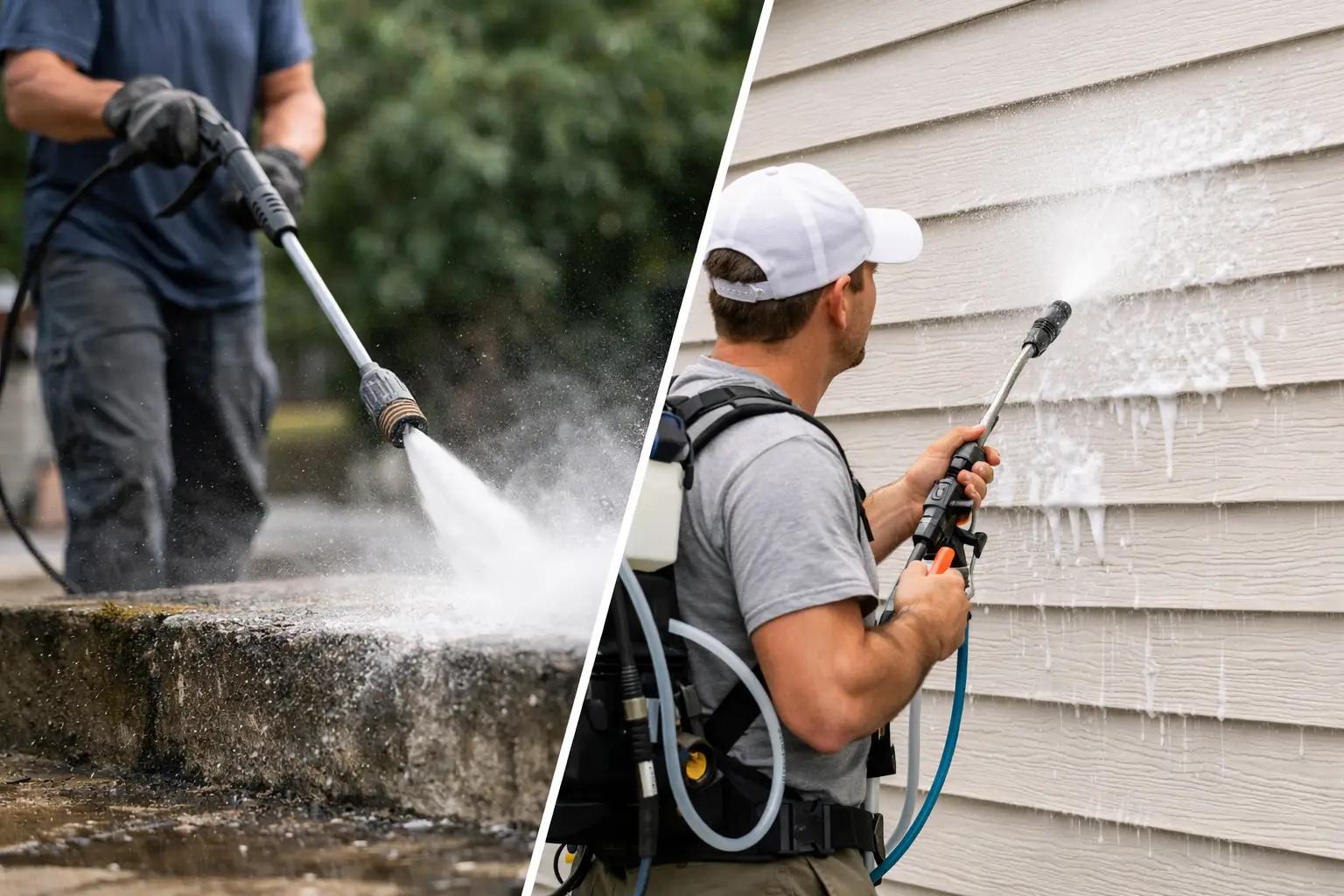
Pressure washing uses a strong stream of water to remove dirt, built-up grime, loose paint, mud and surface contaminants. It relies mainly on force. This makes it highly effective on durable, hard-wearing materials that can handle a more aggressive clean.
Soft washing uses much lower water pressure combined with suitable cleaning solutions to break down organic growth, stains and contaminants. Instead of blasting the surface clean, it treats the build-up and rinses it away more gently. This is usually the safer choice for more delicate or coated surfaces.
The practical difference is simple. Pressure washing is better when the surface is tough and the grime is heavy. Soft washing is better when the surface is more vulnerable or when mould, mildew and algae are the main problem.
That said, there is overlap. A skilled cleaning team will not choose a method based on a single rule. They will assess the material, its age, its condition, the type of staining, water runoff considerations and the finish you want to preserve.
When pressure washing is the right choice
Pressure washing is often the best option for concrete driveways, paved areas, pathways, retaining walls, brick exteriors, factory floors and some commercial hardstands. These surfaces can usually tolerate higher pressure and often collect the kind of compacted grime that responds well to direct force.
If your driveway has tyre marks, embedded dirt or slippery grime, pressure washing can make a visible difference quite quickly. It is also a strong choice for outdoor areas where presentation matters, such as entryways, car parks and loading zones. For commercial sites, this can improve not only appearance but also safety by reducing slick build-up.
Even so, higher pressure is not always better. Excessive pressure can etch concrete, dislodge mortar, strip coatings and force water into joints or cracks. On older surfaces, damage can happen faster than expected. Professional high-pressure cleaning is not just about powerful equipment. It is about controlling pressure, angle, nozzle selection and wash pattern so the surface is cleaned evenly and responsibly.
When soft washing makes more sense
Soft washing is typically the better choice for painted weatherboards, house exteriors, roofs, rendered walls, fences, signage, cladding and other surfaces that can be marked or worn by high pressure. It is particularly effective where mould, lichen, algae or mildew are the real issue rather than just loose dirt.
This matters in Sydney suburbs where moisture and shade create ideal conditions for organic growth. A surface may look like it simply needs a stronger wash, but blasting mould with high pressure can actually spread spores or damage the finish without fully treating the cause. Soft washing addresses that more effectively by targeting the contamination itself.
It is also the preferred option when preserving the look of the property is just as important as removing the grime. On painted or decorative surfaces, a gentler clean helps avoid streaking, chipping and premature wear. For landlords, homeowners and property managers preparing a property for inspection or handover, that can make a real difference to presentation.
The surface matters more than the stain
One of the biggest mistakes people make is choosing a cleaning method based only on how dirty something looks. In practice, the surface should lead the decision.
Concrete can usually handle pressure. Render often cannot. Roof tiles may need careful treatment rather than force. Timber decking may appear solid, but too much pressure can fur up the grain and leave it rough or uneven. Even pavers can shift if cleaning is too aggressive, especially where the jointing sand is already loose.
The age and condition of the material matter as well. A newer sealed surface may respond well to a controlled pressure clean. An older painted fence with flaking sections may need a soft wash or a more selective treatment. What works perfectly on one property can be the wrong approach on the next.
This is why tailored service matters. A fixed method rarely suits every site. Professional cleaning should match the condition of the asset, not just the category of the asset.
Pressure washing vs soft washing for homes and businesses
Residential and commercial properties often need different priorities. A homeowner may be focused on kerb appeal, mould removal and protecting painted finishes. A business operator or facility manager may need slip-risk reduction, hygiene support, minimal disruption and a method that suits public-facing areas.
For a family home, the goal may be to refresh the driveway, exterior walls and entertaining area before sale, inspection or routine maintenance. In that case, a mix of methods is often the smartest approach. Pressure washing might suit the hard surfaces, while soft washing is better for the façade or roofline.
For commercial sites, consistency and compliance matter more. High-traffic entries, bin areas, external concrete, school grounds and shared walkways all benefit from the right cleaning method applied with clear safety controls. In healthcare and education settings especially, surface cleaning is not only visual. It supports a cleaner, more responsible environment.
Why DIY can go wrong
On paper, both methods can look straightforward. In reality, surface cleaning can go off track quickly without the right equipment, products and experience.
A domestic pressure washer can leave striping on concrete, gouge timber, lift paint and drive water into places it should not go. The wrong detergent can affect nearby plants, stain finishes or fail to treat biological growth properly. Even if there is no immediate damage, poor technique can shorten the life of coatings and external materials over time.
There is also the issue of efficiency. What takes a homeowner most of a weekend may still produce a patchy result. A professional operator can assess the site, match the correct method to each surface and complete the work to a much higher standard with less mess and less risk.
For larger homes, strata sites or commercial premises, professional service also means safer setup, better water control and less interruption to occupants or operations. That reliability is part of the value.
How professionals decide what your property needs
A proper assessment usually starts with three questions. What is the surface made from? What type of contamination is present? What condition is the surface already in?
From there, a cleaning team can determine whether pressure washing, soft washing or a combination will deliver the best outcome. They may adjust pressure levels, pre-treat certain areas, use specialised cleaning solutions for mould or grease, and plan runoff management depending on the site.
This is where experience shows. A qualified team does not simply arrive and spray everything the same way. They work with a method that protects finishes, improves results and aligns with the standard you expect from a professional facility services provider.
At Goldenshine Facility, this tailored approach is central to how cleaning should be delivered. Different properties have different needs, and the method should fit the site rather than the other way around.
Which one should you choose?
If you are dealing with hard exterior surfaces such as concrete, brick or paving, pressure washing is often the right fit. If the surface is painted, rendered, older, more delicate or affected by mould and algae, soft washing is usually the safer and smarter choice.
Many properties need both. A full exterior refresh often includes pressure cleaning for driveways and paths, then soft washing for walls, roofs or other sensitive finishes. The best result is rarely about choosing the strongest option. It is about choosing the most suitable one.
A clean exterior does more than improve first impressions. It helps protect property value, supports safer conditions and keeps your home or facility looking cared for. If you are unsure which method suits your surface, that is exactly when professional advice becomes most valuable.
The right clean should leave your property looking sharper, not more worn. That is the standard worth aiming for.