




A final inspection rarely hinges on whether a place looks “pretty”. It comes down to whether it meets the standard your agent or landlord expects when the keys are handed back. That is why the best end of lease cleaning tips are not about surface-level tidying. They are about cleaning with inspection points in mind, working methodically, and knowing where bonds are most often lost.
Why the best end of lease cleaning tips matter
When tenants run out of time, they usually focus on the obvious areas first – benchtops, floors, bathrooms and a quick wipe of the glass. The trouble is that property managers notice the less obvious details just as quickly. Skirting boards, rangehood filters, inside cupboards, light switches and built-up grime around taps can create the impression that the whole property has been rushed.
A proper vacate clean is also different from a regular weekly clean. During a routine clean, furniture stays in place, appliances are still in use and some wear is simply managed. At the end of a lease, the standard is higher because the property needs to be presented ready for the next occupant. That means empty cupboards, cleaned internal glass, sanitised bathrooms, degreased kitchen surfaces and close attention to marks, dust and residue.
If you are preparing to move out of a Sydney rental, the smartest approach is to treat the clean like a project. Start early, check your condition report, and allow more time than you think you will need.
Start with the condition report, not the mop
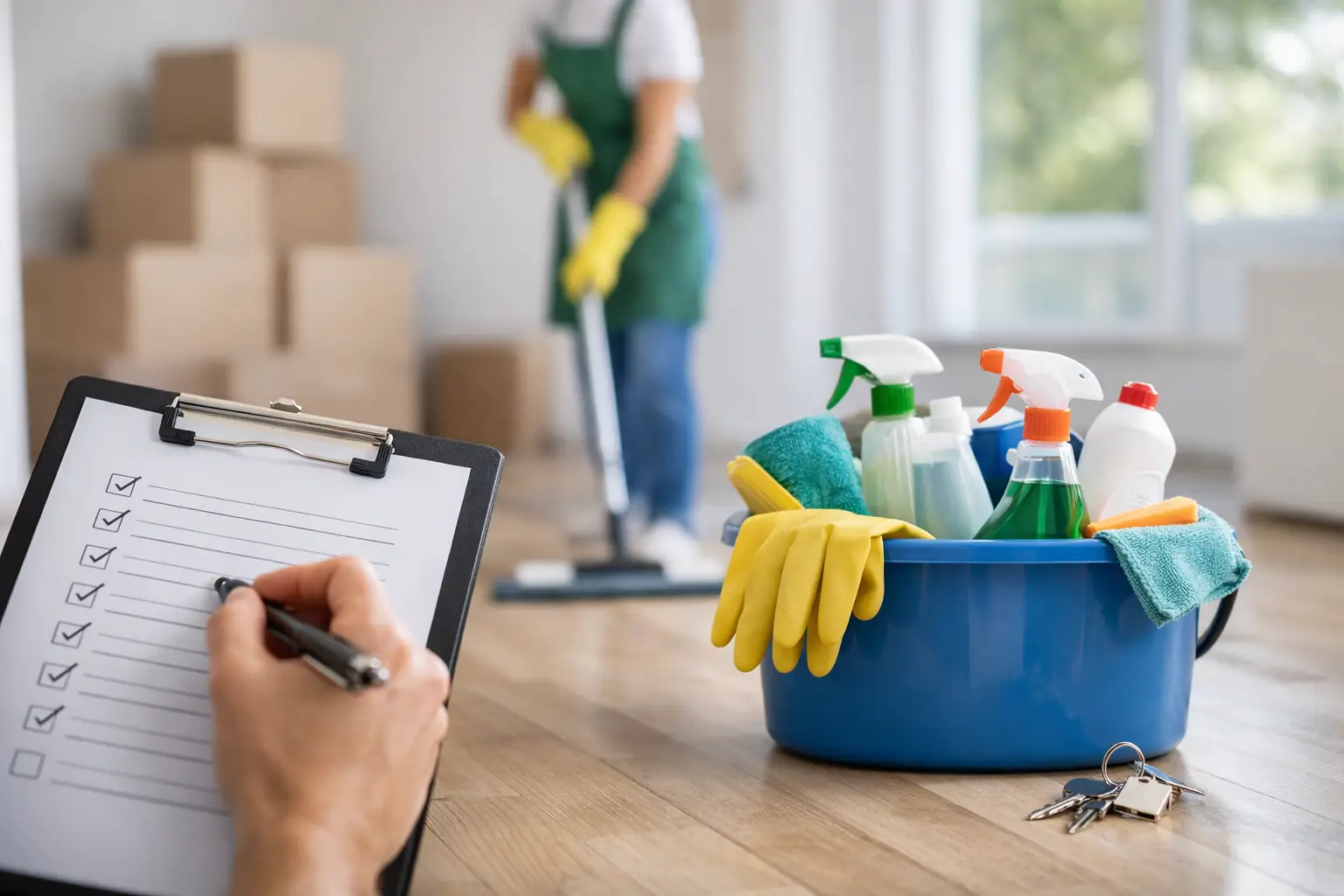
Before you fill a bucket or unpack cleaning products, compare the current state of the property with your original entry report. This gives you a practical benchmark. If the oven was noted as aged but clean, your job is to return it in a similar cleaned condition, not to restore it to brand-new. If walls were already scuffed, you need to distinguish between fair wear and damage.
This matters because end of lease disputes often come from mismatched expectations. A tenant may spend hours polishing the bathroom while overlooking adhesive marks in a wardrobe or dust on exhaust fans. The condition report helps you focus on what will actually be checked.
Take fresh photos as you go. Clear records are useful if there is any question later about the state of the property at handover.
Work room by room and clean from top to bottom
One of the most reliable end of lease cleaning methods is also one of the simplest. Clean each room completely before moving on, and always start high before finishing low. Dust falls. If you wipe floors first and ceiling fans later, you create extra work for yourself.
Begin with cobwebs, vents, cornices, shelves and wardrobe tops. Move down to walls, switches, door frames and internal windows. Finish with skirting boards and floors. This keeps the process controlled and stops you from circling back to areas you thought were finished.
In larger properties, it helps to separate dry tasks from wet tasks. Dusting, vacuuming and rubbish removal can happen first. Detailed wiping, scrubbing and mopping can then follow without spreading dirt around.
Kitchens decide a lot of inspections
If one room tends to shape the outcome of a vacate inspection, it is the kitchen. Property managers know grease builds up slowly and is easy to ignore during everyday living. They will check the cooktop, splashback, rangehood, oven, sink, cupboards and tiled areas closely.
The oven usually needs the most time. Let your chosen degreaser or oven cleaner sit long enough to break down baked-on residue before scrubbing. Rushing this step often leaves streaks and patchy carbon marks. Remove trays and racks, soak them properly, and wipe the inside glass as well as the door edges.
Cupboards should be emptied and wiped inside and out, especially around handles and corners where oils collect. The rangehood filter may need soaking or replacement depending on its condition. Sink polish is useful, but only after you have descaled taps and removed food residue from drain areas.
It depends on the age of the kitchen too. Older cabinetry and worn laminate need a gentler approach than modern hard surfaces. Aggressive chemicals can lift finishes, so matching the product to the material matters.
Bathrooms need detail, not just disinfectant
A bathroom can smell clean and still fail inspection if scale, soap scum or mould is left behind. What agents generally notice is build-up – around shower screens, grout, tap bases, drains, vanity edges and toilet hinges.
The best results come from allowing products time to work. Spray, wait, then scrub. If you wipe immediately, you are often just moving residue around. Shower glass needs particular care because streaks and hard water marks show up under natural light.
Pay attention to exhaust fans and high ledges, which collect dust in a way many tenants miss. If mould is present, it should be treated carefully and appropriately. Surface mould may clean off, but recurring mould can indicate a bigger issue. In that case, documenting the condition is sensible, especially if poor ventilation or building faults are involved.
Walls, marks and small details make a big difference
This is where many otherwise good cleans fall short. Fingerprints around switches, dust on door tracks, marks on walls and grime on skirting boards do not take long to fix, but they stand out during an inspection because they signal a rushed job.
Spot-clean walls carefully rather than scrubbing entire sections without testing first. Some painted surfaces mark easily, and over-cleaning can leave shiny patches. Door frames, handles, power points and wardrobe tracks are all high-touch areas that should be included.
Windows also deserve a realistic plan. Internal glass is usually expected to be cleaned thoroughly. External windows may depend on access and the tenancy agreement, particularly in multi-storey properties. If a window cannot be reached safely, that becomes a practical limitation rather than a cleaning oversight.
Floors should be the final job
Floors carry the evidence of everything that came before them. Dust from shelves, crumbs from cupboards, water from bathroom cleaning and dirt from moving boxes all end up there. Leave them until the end.
Vacuum edges properly, including under where furniture used to sit. Hard floors should be mopped with the correct product for the surface, not simply soaked. Too much water can damage some floor types and leave dull residue behind.
Carpets are where DIY cleaning can become a false economy. A standard vacuum helps with surface dust, but stains, pet odours and embedded soil often need professional carpet steam cleaning. Many leases in Sydney also specifically require carpets to be professionally cleaned, particularly if pets have been kept at the property.
Don’t forget outdoor areas and rubbish removal
Balconies, courtyards, garages and bin areas are often part of the final inspection, yet they are easy to leave until the last minute. Sweep outdoor surfaces, remove leaves, clear cobwebs and dispose of all rubbish properly. If the property includes a small yard, mow if required and leave it tidy.
Rubbish removal matters more than many tenants expect. Leaving broken items, unwanted furniture or bags beside bins can delay handover and create extra charges. If you are downsizing or moving quickly, organise disposal early rather than hoping it will fit into the final day.
Know when DIY is enough and when it isn’t
Some tenants can complete a full vacate clean themselves, particularly in smaller properties that have been well maintained. If the home is already in good order, you have enough time, and you are comfortable handling ovens, bathrooms and detailed finishing, a DIY clean may be workable.
But there are clear situations where professional help is often the better decision. Larger homes, heavily used kitchens, carpet staining, pet odours, mould issues, tight move-out timelines and properties managed under strict inspection standards can all make end of lease cleaning more demanding than expected.
The trade-off is straightforward. Doing it yourself may save money upfront, but only if the result meets the required standard the first time. If the property needs a re-clean after inspection, the cost in time, stress and potential bond deductions can outweigh the initial saving. That is why many tenants choose a professional service with transparent quoting and a bond back guarantee, especially when the move itself is already taking most of their energy.
Timing is half the job
A strong clean is not just about technique. It is also about timing. Try to clean after furniture is removed and before the final handover, with enough daylight left to spot marks and streaks properly. Night-time cleaning hides details that become obvious the next morning.
If tradespeople, removalists or pest control are booked, sequence the work carefully. There is no point mopping a floor before heavy foot traffic or deep-cleaning a room that still contains boxes. Professional teams like Goldenshine Facility often build this order into the service because timing directly affects the final result.
The best end of lease cleaning tips are the ones that reduce risk, not just effort. Clean to the inspection standard, not your usual standard. Be realistic about what the property needs, allow time for the fiddly details, and if the job is bigger than it looks, get support early. A calm, well-planned finish usually shows in the final walkthrough.