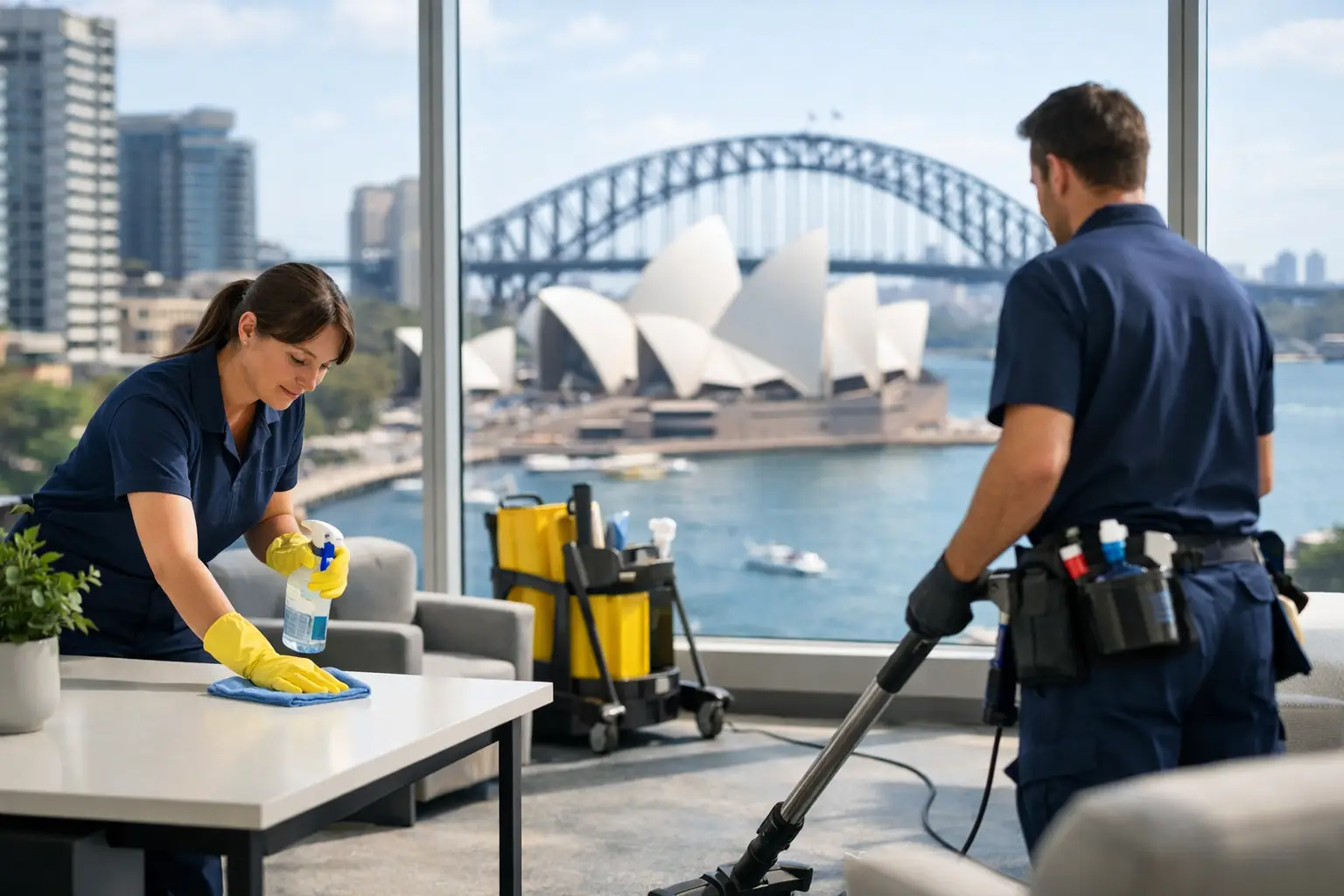





If you are comparing commercial cleaning vs janitorial services, you are probably not looking for a textbook definition. You are trying to work out what your site actually needs – and whether you are paying for the right level of cleaning, at the right time, for the right outcome. For offices, schools, medical settings and shared facilities across Sydney, that distinction matters more than many people realise.
These two terms are often used as if they mean the same thing. In practice, they overlap, but they are not identical. One usually refers to broader, more specialised cleaning for commercial environments. The other generally points to routine, ongoing upkeep that keeps a site presentable and functional day after day. Knowing the difference helps you protect hygiene standards, manage budgets properly and avoid service gaps that only become obvious when complaints start rolling in.
Commercial cleaning vs janitorial services: the core difference
The simplest way to look at it is this: janitorial services are usually regular maintenance cleaning, while commercial cleaning often covers larger-scale, more specialised or less frequent work.
Janitorial work tends to support the daily appearance and basic hygiene of a facility. That can include vacuuming, mopping, wiping surfaces, emptying rubbish bins, cleaning toilets, restocking consumables and keeping shared areas tidy. It is the steady, scheduled work that helps a workplace run smoothly.
Commercial cleaning is often broader in scope and may involve tasks that require specialised equipment, additional training or a more detailed plan. Think carpet steam cleaning, floor scrubbing, high-pressure cleaning, window cleaning for commercial premises, deep sanitisation, post-construction cleans, medical-grade cleaning protocols or site-specific compliance work. These services are often delivered after hours, on a project basis or at intervals that suit the site.
That said, there is no universal industry rulebook for how every provider labels these services. Some businesses use “commercial cleaning” as the umbrella term for all business cleaning, including janitorial work. Others separate them more clearly. That is why the quote, scope and service schedule matter more than the label alone.
What janitorial services usually include
Janitorial services are built around consistency. The goal is not to transform a site in one visit. It is to maintain a clean, safe and orderly environment over time.
In a typical commercial setting, janitorial cleaning might happen daily, several times a week or on another recurring schedule. It commonly includes bathroom cleaning, kitchen and breakroom wipe-downs, bin emptying, hard floor mopping, carpet vacuuming, dusting, touchpoint sanitising and general presentation upkeep. In larger facilities, it may also include monitoring consumables such as hand soap, paper towels and toilet paper.
For busy workplaces, this routine support is essential. Staff notice when bathrooms are not maintained, rubbish starts to build up or entry areas lose their presentation. Clients notice it too. Janitorial services help create a space that feels cared for, hygienic and ready for daily use.
What commercial cleaning usually includes
Commercial cleaning typically goes beyond the day-to-day tasks. It is often used when a site needs deeper cleaning, more technical methods or targeted outcomes that standard maintenance alone will not deliver.
This might involve machine scrubbing hard floors, stripping and sealing surfaces, carpet steam cleaning, deep cleaning kitchens, sanitising high-risk environments, removing built-up grime from external areas or carrying out detailed cleans after renovations. In schools, healthcare spaces and high-traffic sites, commercial cleaning may also include stricter hygiene protocols and more detailed quality control.
Because the work can be more specialised, commercial cleaning often starts with a site assessment. Different materials, operating hours, traffic levels and compliance needs all influence the approach. A warehouse, a child care facility and a corporate office may all be commercial sites, but they do not need the same cleaning plan.
Which service does your facility need?
For many Sydney businesses, the answer is not one or the other. It is both.
If your premises need to stay clean and functional every day, janitorial support is usually the baseline. If your floors have lost their finish, carpets are holding odours, external surfaces are stained or hygiene standards need to be elevated beyond routine upkeep, commercial cleaning fills that gap.
A good example is an office that receives regular janitorial cleaning through the week, then books periodic deep carpet cleaning and hard floor treatment every quarter. A school might rely on daily janitorial work during term, then schedule more intensive commercial cleaning during holidays. A medical or allied health site may require routine maintenance plus targeted disinfection and compliance-focused cleaning at set intervals.
The right setup depends on foot traffic, the type of work carried out on site, the vulnerability of building users and the standard you need to maintain. If your environment is client-facing, heavily used or hygiene-sensitive, relying on basic routine cleaning alone can leave blind spots.
Cost, frequency and value
One reason people compare commercial cleaning vs janitorial services is budget. Routine janitorial cleaning is usually priced around frequency, labour time and the size of the premises. Commercial cleaning is more likely to vary based on equipment, condition, access requirements, risk level and whether the work is a one-off or scheduled project.
At first glance, janitorial services can seem like the more economical option because they focus on regular essentials. But if a site never receives deeper treatment, surfaces wear out faster, stains become harder to remove and presentation can decline even when the space is being cleaned often. On the other hand, booking specialised commercial cleaning without a proper maintenance plan may mean you are paying to fix the same issues repeatedly.
The best value usually comes from a tailored mix. Regular upkeep protects the day-to-day standard. Periodic deeper cleaning protects the asset, the appearance of the premises and the health standard over time.
Why terminology can cause confusion
Part of the confusion comes from how providers market their services. “Janitorial” can sound old-fashioned to some audiences, while “commercial cleaning” sounds broader and more modern. As a result, many companies group everything under one heading, even when the actual services range from basic nightly cleaning to specialised deep cleaning programs.
That does not make the provider wrong, but it does mean clients should ask better questions. Rather than asking, “Do you offer janitorial services?” it is often more useful to ask what is included in the recurring scope, what is excluded, how quality is checked, whether consumables are handled, and what specialised cleaning can be added when needed.
For property managers and business operators, clarity at the quoting stage prevents frustration later. If the expectation is daily washroom maintenance, spot cleaning of glass and restocking supplies, that should be documented. If carpet extraction, high-pressure cleaning or mould treatment are separate services, that should also be clear from the start.
How to choose the right provider
The right cleaning partner should do more than hand over a generic checklist. Commercial sites vary too much for that. A dependable provider will look at how your premises operate, when the space is occupied, what standards you need to meet and which areas attract the most wear.
It is also worth looking for flexibility. Cleaning needs shift with seasons, staffing levels, school terms, fit-outs and tenancy changes. A rigid package may leave you paying for the wrong things. A customised plan is usually a better fit, especially if your site needs recurring maintenance plus occasional specialist work.
Trust matters as well. For any commercial premises, you want insured, trained staff, transparent quoting and a clear process for quality checks. If cleaners are working before opening, after hours or in sensitive environments, reliability is not a bonus. It is part of the service.
This is where an experienced local provider can make a real difference. Goldenshine Facility supports Sydney homes, workplaces and specialised sites with tailored cleaning plans designed around actual operational needs rather than fixed assumptions.
The better question to ask
Instead of asking whether you need commercial cleaning or janitorial services, ask what cleaning outcomes your site needs to maintain. Do you need steady daily presentation, deeper hygiene control, specialist treatment for problem areas, or all three at different times?
When the cleaning plan matches the way your facility is used, the benefits are clear. Staff work in a healthier environment, visitors see a better-presented space, and maintenance issues are dealt with before they become expensive problems. The right service is not the one with the most impressive label. It is the one that keeps your premises clean, compliant and ready for the people who rely on it every day.
If you are weighing up your options, start with the condition of your site, not the terminology. The right cleaning structure should fit your building as naturally as the people who use it.